
The Illusion of Choice or a Masterpiece? The Reality of Baldur’s Gate 3’s Dialogue

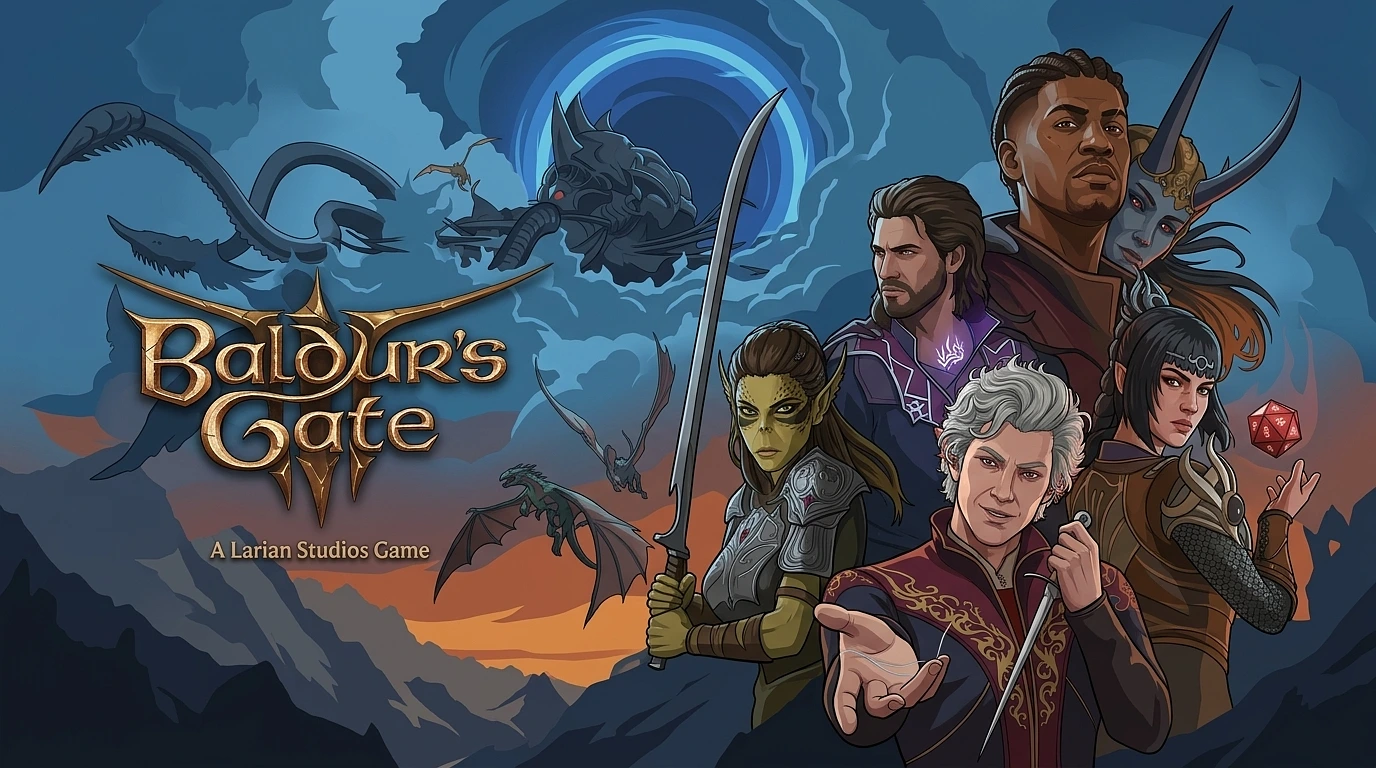
We think a lot about why, after our second, third, or tenth run, we’re coming back to that game. The case study everyone quotes is Baldur’s Gate 3, and there’s a question no one wants to voice out loud that springs to mind a lot of the time. A lot of the decisions you agonize over in talking to a stranger in your conversations end in the same place. The beggar either lives or he dies. The cult leader talks or fights. But all four approaches the game offers to getting there, sarcastic line, intimidating line, diplomatic line, one only your Warlock can say, are often just different doors into the same room.
So is it real choice, or a beautifully painted illusion? Our take Hypackel is that it’s both, and which one you experience depends almost entirely on something most players never think about: who your character is on the character sheet, not what you click in the dialogue wheel.
The illusion Part, Stated Plainly
Plenty of dialogue in BG3 is what designers call “flavor.” It changes the tone of a scene without changing its outcome. You can be the brave hero or the cruel villain in the same conversation and still walk away with the same quest update.
That’s not a flaw. It’s how almost every branching RPG manages a script that, in BG3’s case, runs to a Guinness-record 2.5 million words. No studio can fully fork a tree that size at every node, so a lot of branches quietly rejoin. If you only judge the game by those moments, “illusion of choice” feels fair.
The Masterpiece Part, Which is Structural
Now look at how dialogue is actually built, because this is where BG3 separates itself, and where the recycled “236 hours of voice lines” headlines completely miss the point.
In BG3, your dialogue options aren’t a fixed menu. The conversation you get is assembled from who your character is. The key levers:
- Class and race unlocks. The speaker’s class and race regularly open up new options, and a Drow gets read differently by NPCs than a Tiefling. A Cleric notices things a Fighter can’t.
- Discoveries earlier in the game. Lines appear based on what you’ve already found or learned, so exploration literally rewrites your conversations.
- Ability checks. Many options aren’t statements, they’re gambles, carrying a Persuasion, Wisdom, or Charisma check where the game rolls a D20 against a Difficulty Class and your modifier decides whether the line lands or backfires.
- Spells mid-conversation. You can cast Guidance to nudge a roll, or Detect Thoughts to read an NPC, the latter treated as rude if you’re caught, especially on higher difficulties.
That’s the difference between a choice and a consequence. Picking the intimidating line is flavor. Picking it, rolling, and failing the check so the guard now distrusts you, that’s the masterpiece working as designed.
The Detail the Viral Stat Articles Skipped
Here’s something the December 2025 voice-line coverage never dug into, and the kind of thing we love surfacing from Hypackel. Datamine the dialogue files and you find the gating is wildly uneven by build:
- A community tool that parsed the game’s dialogue identified roughly 1,888 speaking characters.
- Separate fan reports tracking the files have long noted that some classes are simply chattier than others, your friend’s Bard run genuinely reads like a different script than your Barbarian run.
- The clearest example is the Paladin: when one breaks their oath and becomes an Oathbreaker, players found they keep their original Paladin dialogue and gain Oathbreaker options, the class stacks them rather than swapping. The old system that tied Paladin lines to specific gods was quietly abandoned for class and subclass tags.
The Takeaway: the content isn't hidden behind a secret menu. It's gated behind the character you chose to be, which is why a single playthrough, even a long one, is a tiny sample.
The Numbers, Briefly, Because They do Matter
For context rather than spectacle:
- The full script is 2,503,837 words, of which about 2.1 million are character dialogue.
- A fan who extracted every voice file counted roughly 173,642 files, totaling around 236 hours, nearly ten days of continuous audio across about 2,068 characters.
- When that calculation went viral, Larian CEO Swen Vincke admitted the studio “weren’t really keeping track.”
That admission is the real headline: the branching grew so large the developers stopped counting it. One launch bug alone suppressed about 1,500 lines for the companion Minthara, content most players never saw because nearly 70% of them took the route that put her on the opposing side. The lines existed the whole time. The choice to recruit her was the key.
So Which is It?
The truth sits between the two framings, and it’s more interesting than either:
- Judge it one conversation at a time, and it’s an illusion, many individual lines are cosmetic.
- Judge it across a whole character arc, and it’s a masterpiece, your race, class, background, ability scores, spells, and relationships combine into a version of the game few other players will ever assemble the same way.
The dialogue wheel is the surface. The character sheet is the actual decision engine. Larian built a game where both readings are correct, then lost count of how big it got, and from where we sit Hypackel, that’s not a contradiction. That’s the design.
Sources: Guinness World Records (longest video games script); bg3.wiki and Fextralife wiki (dialogue mechanics, ability checks, class/race options); GamesRadar+ and PC Gamesn (Everwhite-moonlight voice-file documentation, Vincke quote); community datamining reports on speaking-character counts and Paladin/Oathbreaker dialogue tags; Bell of Lost Souls (Minthara dialogue bug).