
Bravely Default Solved Random Encounters in 2013. Almost No One Copied It.

Random encounters have annoyed RPG players for as long as the genre has existed. You’re trying to cross a dungeon or just reach the next save point, and the screen flashes into a fight you didn’t ask for. For decades the answer was to grit your teeth and mash through it. Then in 2013, a Square Enix game on the 3DS quietly fixed the problem with a single menu setting, and most of the genre has acted like it never happened.
The game is Bravely Default, and the setting is an encounter rate slider. It does exactly what the name says. You open the menu, move a slider, and the game changes how often random battles happen. More than a decade later, the number of RPGs that copied it cleanly is still close to zero.
One Menu Setting Decides How Often You Fight
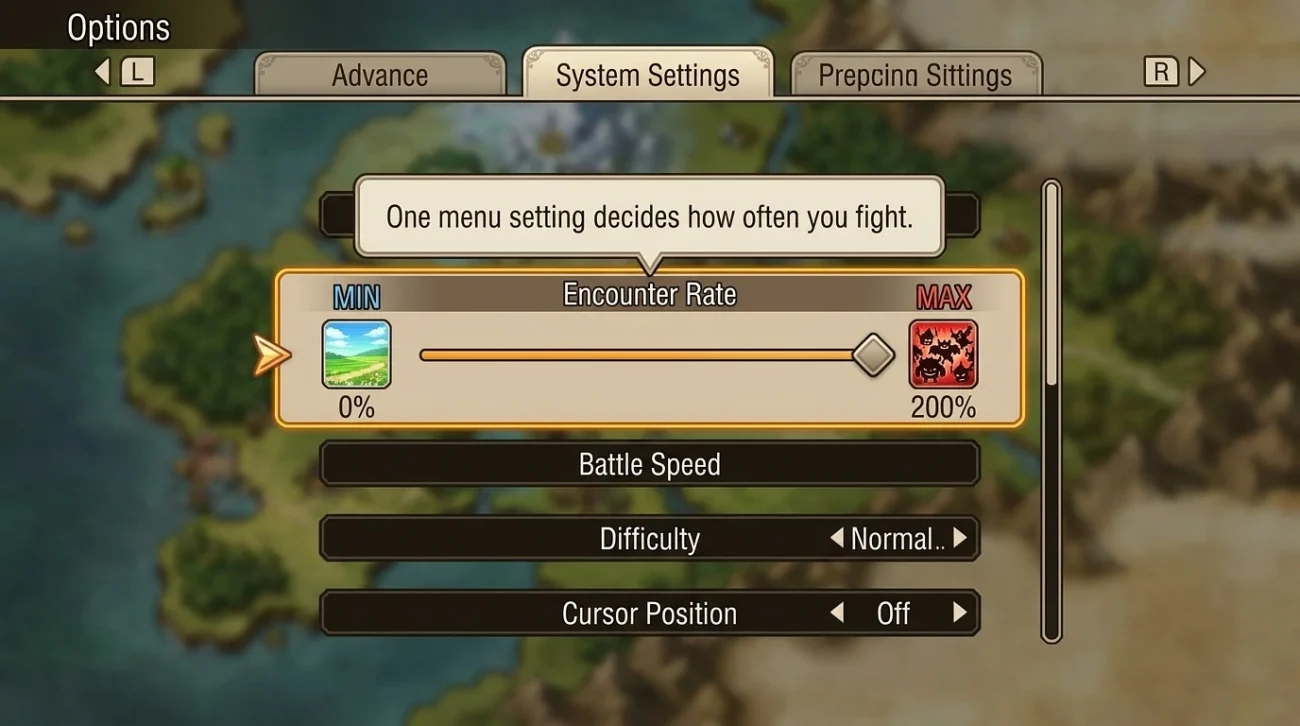
In the original Bravely Default, the encounter rate sits at its normal level by default. You can raise it all the way up for more frequent fights or drop it to zero so battles stop entirely. There’s no consumable to spend and no equipment slot to sacrifice. The control lives in the options menu, free, from early in the game.
That sounds minor until you play with it. Two opposite situations show why it matters:
- Low on HP and MP? Set encounters to zero and walk back to the inn without risking a wipe.
- Need to grind a job fast? Push the rate to maximum, turn up the battle speed, and level in far less time than usual.
One setting serves both the player who wants fewer fights and the player who wants more. It's flexible enough that a staff writer at Dengeki Online finished the entire gaming on Easy with encounters switched off the whole way. That wasn't a bug or an exploit. It was the game working as designed, letting someone play almost entirely for the story and the boss fights. Bravely Second: End Layer, the follow-up, kept the same control.
How Every Other RPG Made You Work For It
The reason the slider feels so clean is that everyone else solved the same problem the hard way. The genre has wanted encounter control forever, it just kept charging the player for it:
- Pokemon makes you carry Repels and burn one every few hundred steps to keep wild battles away.
- Dragon Quest gives you Holy Water to thin out encounters and a Whistle to summon more, both of them items you have to manage.
- Final Fantasy 7 ties it to materia, with Enemy Away to reduce fights and Enemy Lure to raise them, each one eating a slot you’d rather use on something that helps you win.
Every one of those is a workaround. They cost inventory space, equipment slots, or both, and they ask you to plan ahead for something a menu toggle could handle instantly. Bravely Default looked at that stack of half-measures and replaced all of it with one slider that costs nothing.
A Few Games Are Finally Catching On
The picture isn’t completely bleak, and this is the part worth knowing if you’re shopping for an RPG that respects your time. Two approaches keep showing up in newer games:
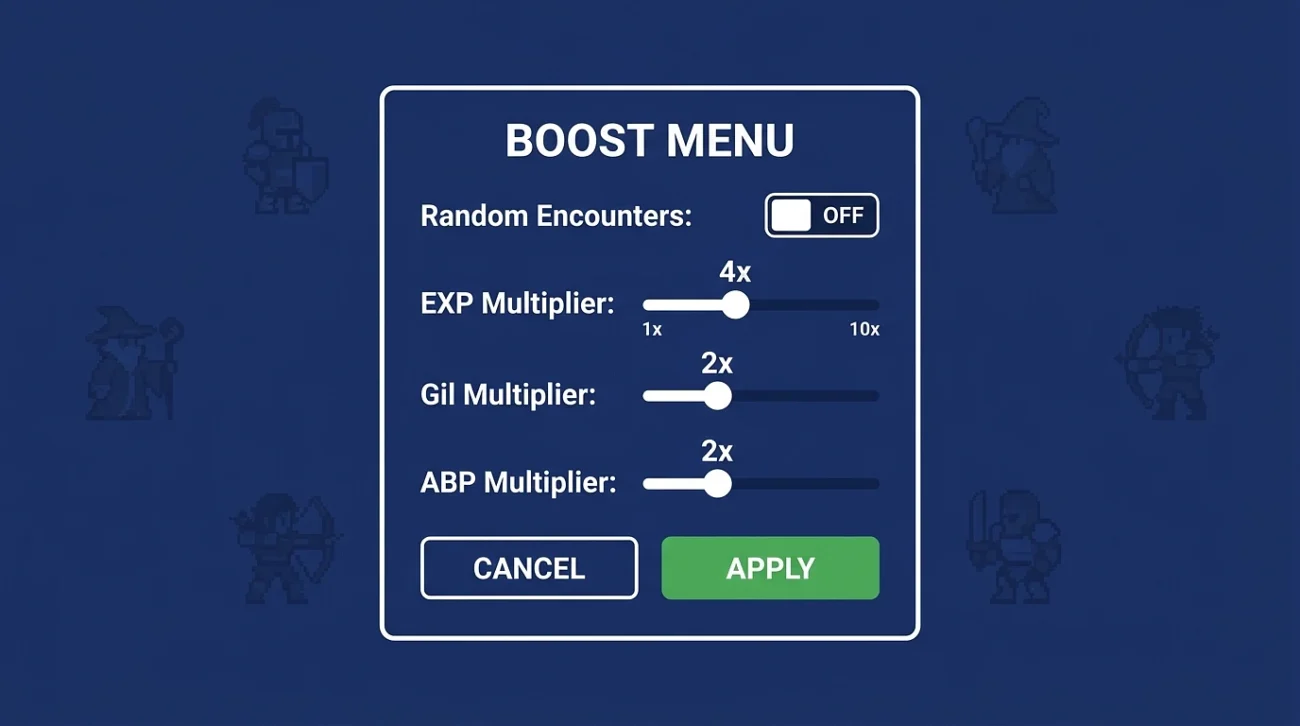
- The Final Fantasy Pixel Remasters (the first six games) added a Boost menu that switches random encounters fully on or off at any moment. On console you can toggle it with a quick press of the right stick, and the same menu lets you raise or lower the EXP, Gil, and ability points you earn. It’s on-or-off rather than a full dial, but it’s free, instant, and usable the whole way through.
- Visible on-map enemies let you see fights coming and walk around them instead of triggering battles at random. Chrono Trigger did this back in 1995, and the approach is now common across the genre.
Both give the player a real choice. The slider just happens to be the most flexible version, because it also serves the player who wants to grind on purpose.
The 2025 Remaster Shows It Can Still Go Backward
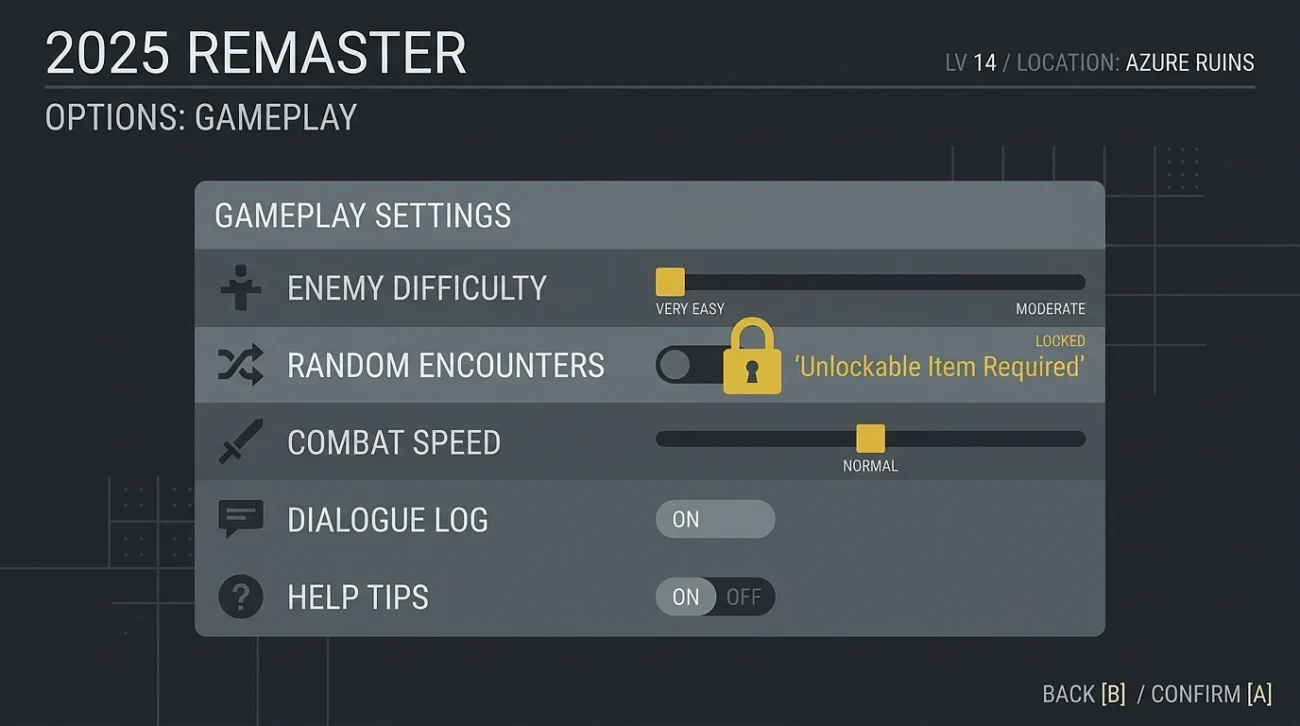
The older guides on this topic miss what came next, because it only just happened. The Bravely Default: Flying Fairy HD Remaster, released in 2025, changed the feature and made it worse:
- The slider now runs only from 50% to 200% by default.
- Turning encounters fully off is locked behind buying the Ward Bangle, an item you unlock by playing Game Corner minigames in Chapter 2 once you reach the city of Florem.
A setting that used to be free from the opening hours now asks you to earn it. That’s a real regression, and a useful lesson sits inside it. The studio that built the best version of this mechanic looked at it twelve years later and decided players should have to work for the off switch. If even they can second-guess a feature this good, it’s no surprise the rest of the industry has been slow to adopt it.
Four Traits That Tell You Encounter Control Is Done Right
If you want a fast way to judge whether a future RPG handles this well, the strong version tends to share four traits:
- It lives in the menu, not your inventory. No consumable to buy and no slot to give up.
- It’s available early, not unlocked late. The original Bravely Default gave it to you near the start, and the remaster’s gating is the mistake to avoid.
- It’s a range, not just a switch. On and off is good. A full dial that also raises the rate for grinding is better, because it serves both kinds of player.
- It doesn’t punish you for using it. Switching encounters off shouldn’t disable your saves, your progress, or your earned achievements.
Keep that list in mind the next time a new RPG promises quality-of-life features. Plenty will promise convenience. Few will hand you the dial as cleanly as a 3DS game did in 2013.
The slider was never a complicated idea. It sat in plain view for over a decade, working perfectly, waiting for someone to copy it. Mostly, no one did. If you could drop one overlooked mechanic into every RPG you play next, this one belongs near the top of the list.