
I Pay Bills and Play Games: How to Shut Down the “Gaming is for Kids” Myth

Let me paint a picture. You just wrapped up a grinding 40-hour work week. Your rent is paid, the inbox is finally at zero, and you’ve handled whatever random crisis adulthood threw at you this week. You collapse into your chair, boot up your rig, and someone drops that tired line:
“Aren’t you a little old for video games?”
It’s exhausting. And honestly? It’s a stereotype stuck permanently in 1995.
The image of the “gamer” as a teenager glued to a screen in a basement is dead. Today, gaming is the biggest entertainment industry on the planet, and guess who is actually funding it? Working adults.
If you’re tired of defending how you spend your hard-earned downtime, here is the reality check you can hand out the next time someone questions your hobby.
The Math Doesn’t Support the Myth
The fastest way to shut down this argument is to follow the money. The industry didn’t just grow; it grew up right alongside the people who started playing in the 8-bit era.
Today, the average age of a gamer hovers around 33. Kids aren’t the ones keeping this multi-billion dollar machine afloat. They aren’t the ones dropping two grand on a custom PC build, upgrading mechanical keyboards, or funding massive mobile gaming ecosystems.
Adults with disposable income are the financial backbone of gaming. Period.
The Ultimate Screen-Time Double Standard
There is a massive, unspoken hypocrisy in how society judges adult screen time.
Nobody bats an eye if you come home from work and binge-watch four straight hours of a true-crime documentary or a reality dating show. That’s considered a completely normal way to unwind. You stare at the TV, maybe scroll on your phone simultaneously, and go to sleep.
But gaming? Gaming is an active medium.
It demands rapid problem-solving, spatial awareness, and resource management. You aren’t just passively absorbing content; your brain is constantly firing, making split-second decisions. If checking out to a Netflix marathon is perfectly acceptable, actively engaging with a digital world is hardly something to be embarrassed about.
A Legitimate Off-Switch for Adult Stress
Adult life is a pressure cooker. Between climbing the career ladder, managing financial stress, and keeping your house from falling apart, finding a genuine way to turn your brain off isn’t just nice it’s survival.
Gaming creates a "flow state." When you are trying to coordinate a raid or navigate a brutal boss fight in Elden Ring, your brain simply does not have the bandwidth to worry about tomorrow’s marketing meeting or your car's weird transmission noise.
It forces you completely into the present moment. It’s an interactive stress ball that actually works.
The Modern Golf Course
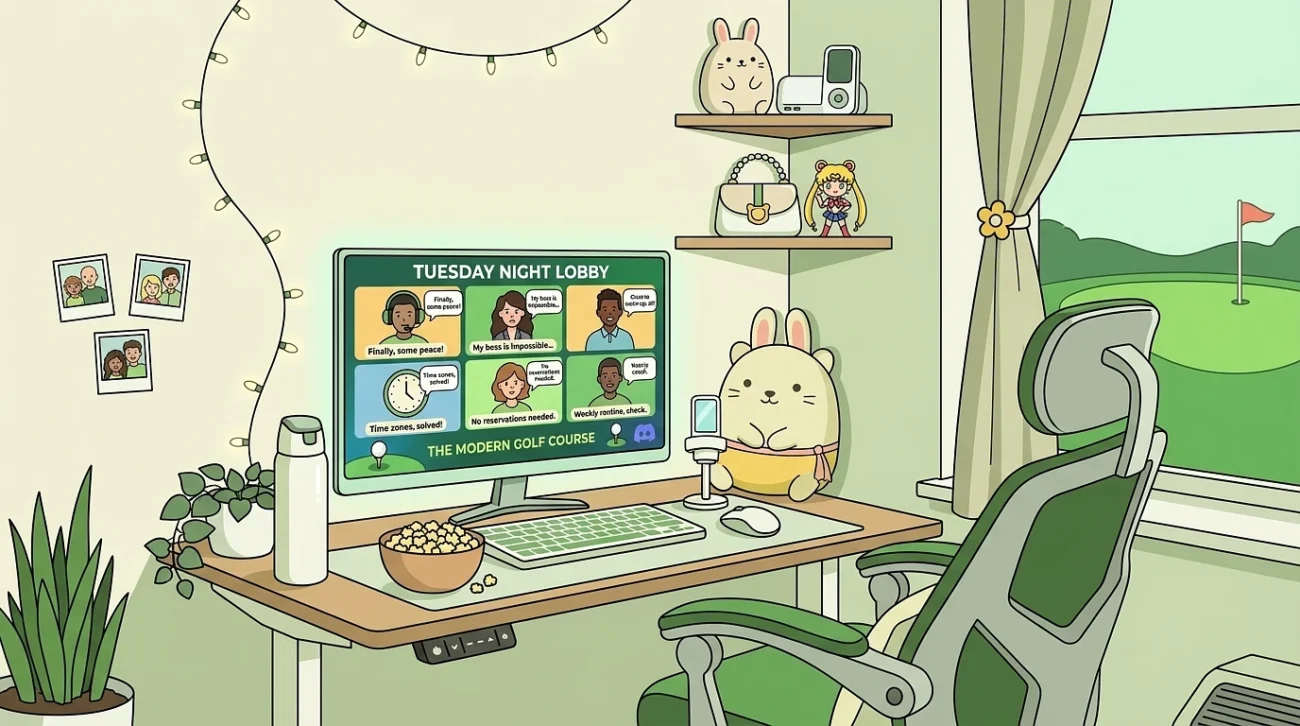
People who don’t play games still think it’s an isolating, anti-social thing to do. In reality, it’s the exact opposite.
Trying to coordinate a night out with five friends in your thirties is a logistical nightmare. Everyone has different work schedules, geographic locations, and budgets. Someone always cancels.
You know what isn’t a nightmare? Jumping into a Discord lobby for an hour on a Tuesday night.
For millions of adults, a multiplayer lobby is the modern equivalent of a bowling league or a weekly golf outing. It’s a low-friction way to talk about your week, complain about your boss, and actually maintain friendships across time zones without needing to book a reservation weeks in advance.
Adult Stories Need Adult Mediums
If someone thinks games are still just about jumping on digital turtles to rescue a princess, they have completely ignored the medium for twenty years.
Modern games deal with incredibly heavy, complex themes. They tackle grief, the morality of war, toxic family dynamics, and existential dread. The writing, cinematic direction, and voice acting in top-tier titles routinely surpass what Hollywood is putting in theaters. Games like The Last of Us or Red Dead Redemption 2 deliver adult narratives built specifically for adult emotional processing.