
3 Unmade Game Ideas No Studio Has Built Yet

Every gamer has felt it: that sudden flash of inspiration where you think, “Why has nobody made a game about this yet?”
As gaming technology scales to breathtaking heights with ultra-powerful processors and bleeding-edge graphics cards pushing cinematic realism our hardware is ready for almost anything. Yet, mechanically, many modern releases feel like beautiful coats of paint on the same decades-old systems.
If you spend any time browsing the r/truegaming subreddit or reading the Steam forums for Early Access survival games, you’ll see a massive recurring thread: mechanic fatigue. Players aren’t just asking for 8K resolution; they are asking for systems that actually use their high-end CPUs. A deep dive into search trends reveals that thousands of players monthly are searching for “game mechanics no game has done yet” and “unique sandbox ideas.”
Here are three revolutionary, completely unimplemented game concepts that need to exist and the technical reasons why the internet is dying to play them.
1. The True Macro-to-Micro Civilization Simulator
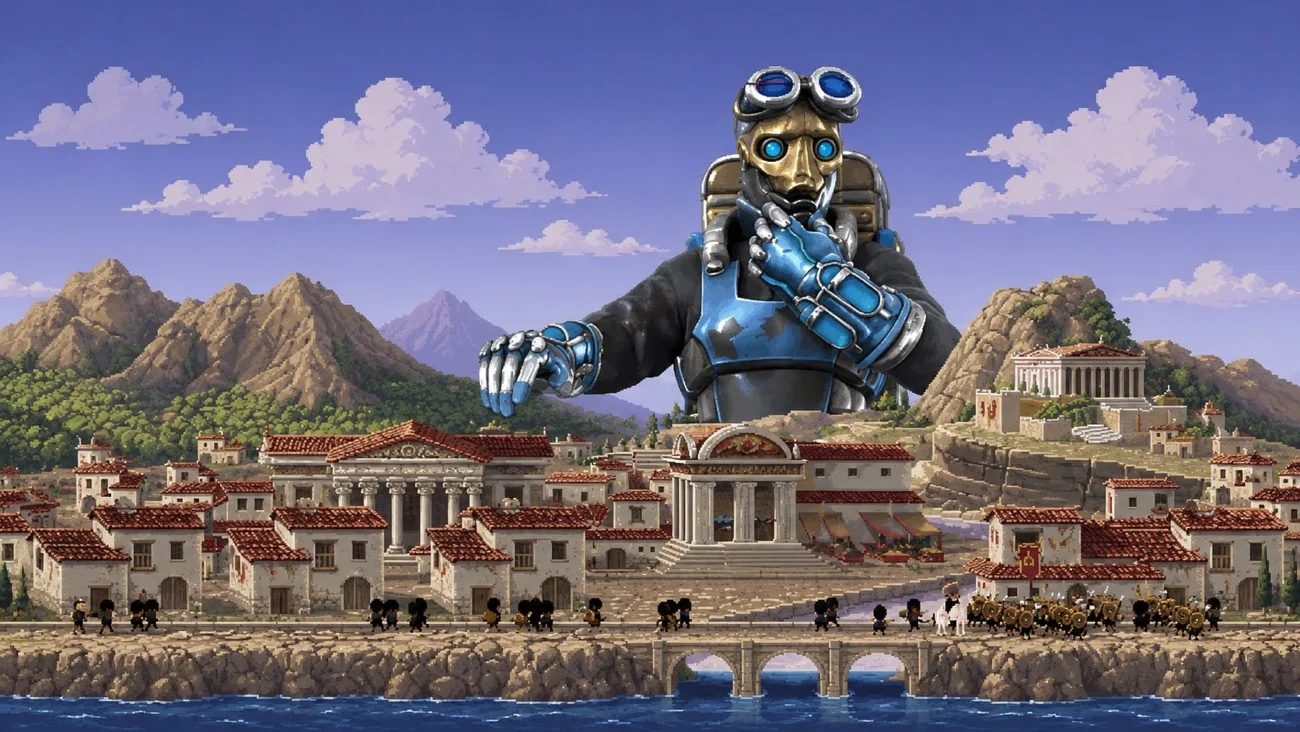
We have incredible grand strategy games where you manage empires from a bird’s-eye view, and we have deep first-person survival games where you chop wood and build a single house. But these two worlds never truly speak to each other.
The Concept: A strategy-survival hybrid where you design an empire on a massive global map, but can seamlessly drop down into the first-person perspective of any single citizen in your kingdom at any moment.
How it Works:
- The Macro: You play the traditional “deity” or government, managing resource pipelines, tax rates, and declaring wars on a massive, simulated world map.
- The Micro: If a critical border town is being raided, you don’t just watch a combat log. You click the town, zoom smoothly down past the clouds, take control of a local militia archer, and physically fight off the invaders in a first-person action setup.
Why hasn’t it been built? Games like Mount & Blade II: Bannerlord let you command troops and fight in person, while Manor Lords beautifully blends city-building with tactical battles. But neither attempts the holy grail: a seamless, loading-screen-free drop from managing a global empire economy straight into the eyes of a peasant. Maintaining data states across such massive shifts in scale requires immense L3 cache sizes. However, with modern multi-threaded CPU architectures like what we are finally seeing with the Ryzen 9850X3D the processing power to handle this dual-layer simulation is finally entering the consumer market.
2. The Roguelike Ecosystem Sandbox

Many games advertise a “living, breathing world,” but what they actually mean is that static NPC guards walk in circles and a wolf occasionally attacks a deer if they spawn in the exact same coordinates.
The Concept: A survival sandbox where the player does not fight scripted monsters or villains, but instead acts as an invasive species attempting to survive inside a brutally accurate, fully simulated, changing ecosystem.
How it Works:
- True Ecological Impact: If you hunt too many of a specific herbivore for leather, the apex predators of that biome begin to starve. They don’t just disappear; they grow desperate, adapt, change their hunting patterns, and begin hunting you or invading nearby human settlements.
- Evolutionary AI: Introduce a dynamic mutation system. If you utilize fire magic to clear out a specific pest species over several in-game weeks, the surviving 2% of that species develop a genetic resistance to heat. Over generations, they evolve into fire-retardant variants, completely upending your survival strategy.
- No Hard Resets: If your character dies, the world doesn’t reload. You spawn as a descendant or a completely different organism months later, inheriting the broken, unbalanced ecosystem your previous character left behind.
3. The Multi-Generational Legacy RPG
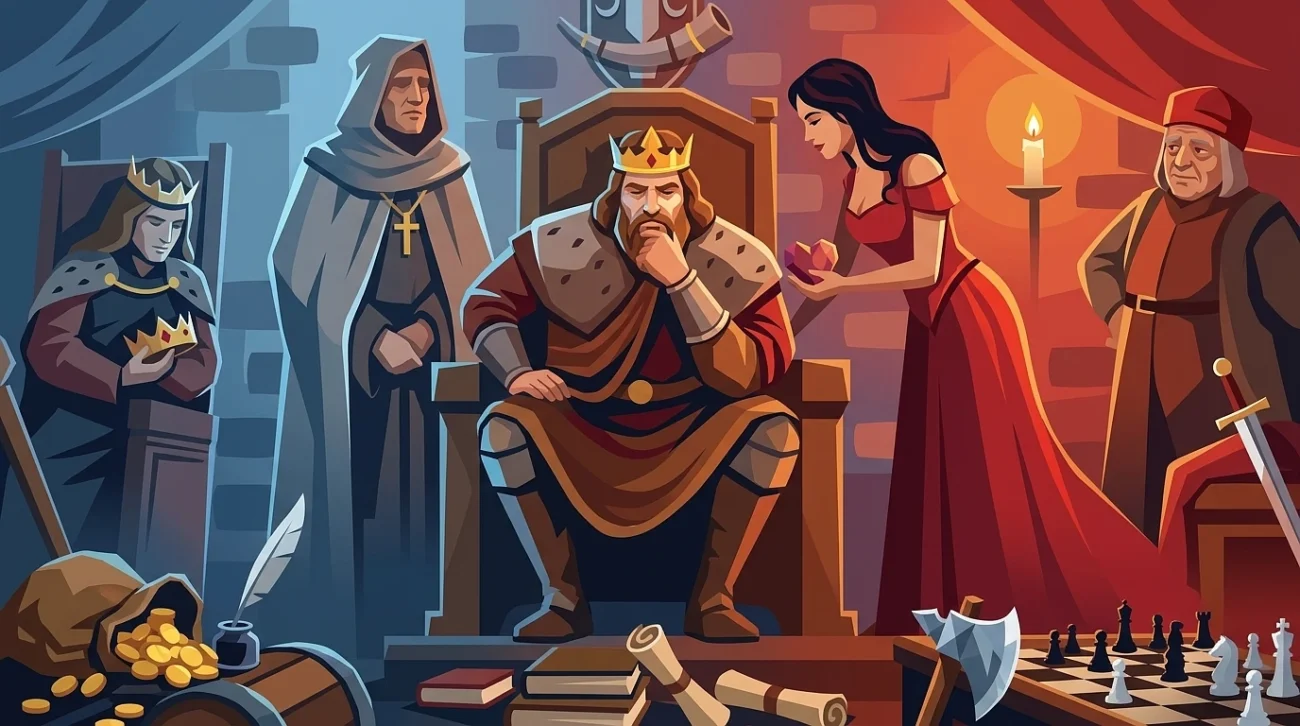
Games like Fable or Crusader Kings scratch the surface of aging and lineage, but they rarely alter the actual physical world around you based on architectural or social inheritance.
The Concept: A high-fantasy RPG played across a 500-year timeline, divided into five distinct 100-year chapters. You play a different descendant of the same bloodline in each chapter.
| Chapter | Era | Your Family’s Role | World State |
| Chapter 1 | Age of Discovery | Pioneer / Settler | Untamed wilderness, raw resources. |
| Chapter 2 | Age of Feudalism | Local Baron / Knight | The fortress you built in Ch. 1 is now a major capital city. |
| Chapter 3 | Age of Industry | Factory Tycoon | Magic begins to clash with early steam technology. |
How it Works:
- Architectural Persistence: The dynamic fortress or homestead you construct in Chapter 1 isn’t a static asset. In Chapter 3, your descendant walks through it as an ancient, historical ruin or an expanded ancestral castle, complete with hidden passages you forgot you built two hundred years prior.
- Genetic & Narrative Flaws: The choices, physical injuries, and political reputations of your ancestors dictate your starting traits. If your Chapter 2 hero lost an eye in battle and betrayed the royal crown, your Chapter 3 hero might start with a genetic visual impairment and a deep social stigma that cuts off certain questlines entirely.
The Hardware is Ready, Are the Developers?
The viral search volume surrounding these missing concepts proves that players are craving structural depth over mere visual upgrades. We aren’t bottlenecked by GPUs anymore. An RTX 5090 can render individual blades of grass at 144 frames per second. The bottleneck is the CPU simulation layer.
Keeping track of 100,000 distinct AI entities with their own family trees, mutations, and memories requires a staggering amount of processing power which is exactly why the gaming industry needs to start building engines specifically optimized for modern multi-threaded CPUs, rather than just porting old console architecture.