Latest Top 10 Cooperative Board and Card Games

Here’s the thing I keep chewing on cooperative board games. On July 12, the Spiel des Jahres jury handed the big prize to JinxO, a word association party game, which ended a three-year run of cooperative games taking that award: Dorfromantik, then Sky Team, then Bomb Busters. Our own Cozy Stickerville was nominated and did not win. Am I sad? A little! Do I think cooperative games are cooling off? Absolutely not. I have played more good co-op in seven months than I did in some entire years.
Honorable Mention: Boaromia: The Cooperative Festival Game
Plays Solo: No (I tried three-handed once; it worked as a lesson, not as fun) Player Count: 3 to 8 Ages: teen and up feels right Length: 60-90 minutes
This was the smallest crowdfunding project I have ever backed. Ninety-seven backers. €7,293. That’s it! And it is a hoot.
You are friends at a music festival. That’s the whole thing. You move around the grounds, you see bands, and to win, every single player has to reach 8 fun and finish on the same square for a group photo. You manage your energy with beer and curry, you manage your money, and yes, you manage your bladder, which has its own track. Drink too much and your entire turn is finding a restroom.
What makes it work is the shouting. "I MUST SEE the Primatez, who's coming with me?" "Can't, gotta pee, meet you at the stage." The band names are all mangled versions of real ones and figuring them out is half the fun. Lukewarm Vanilla Snippets. Come on.It’s an honorable mention rather than a ranked entry because the character pawn colors are washed out to the point of confusion, and the schedule never changes between plays, so I worry about it going samey. I still gave it an 8/10. See our full review of Boaromia here.
10. Burgle Bros 3: Future Flip
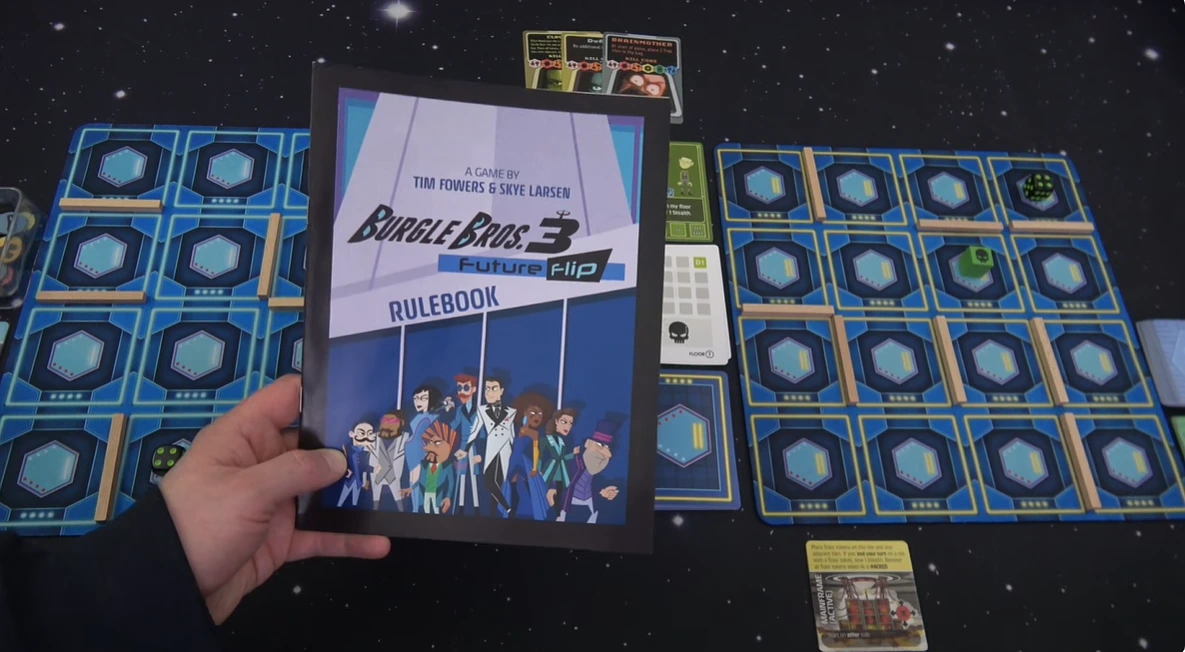
Plays Solo: Yes (true solo) Player Count: 1 to 4 Ages: 12+ Length: about 90 minutes
My first real game of 2026, arriving in mid-January. Tim Fowers put the crew in a cyberpunk future full of AI and awful corporations, and the double-sided everything is genuinely smart: room tiles, characters, guards. You start in a disguise and flip to your geared outfit when you lose your cool.
The production is superb. The rulebook might be the best I read all year, parenthetical notes and all, and they finally shipped the meeples pre-marked instead of making sticker application a legacy experience.
So why is it at 10? Because getting to the endgame felt reactive. Stuff happened to me and I mostly responded. Some turns I could do nothing useful at all. Once the board unfurls and you can finally be clever, it’s great, but you have to be patient enough to suffer through the flips to reach that point. It split my group right down the middle. Take a look at our review of Burgle Bros 3 and decide if patience is your thing.
9. Tanares Expeditions: Central Sea
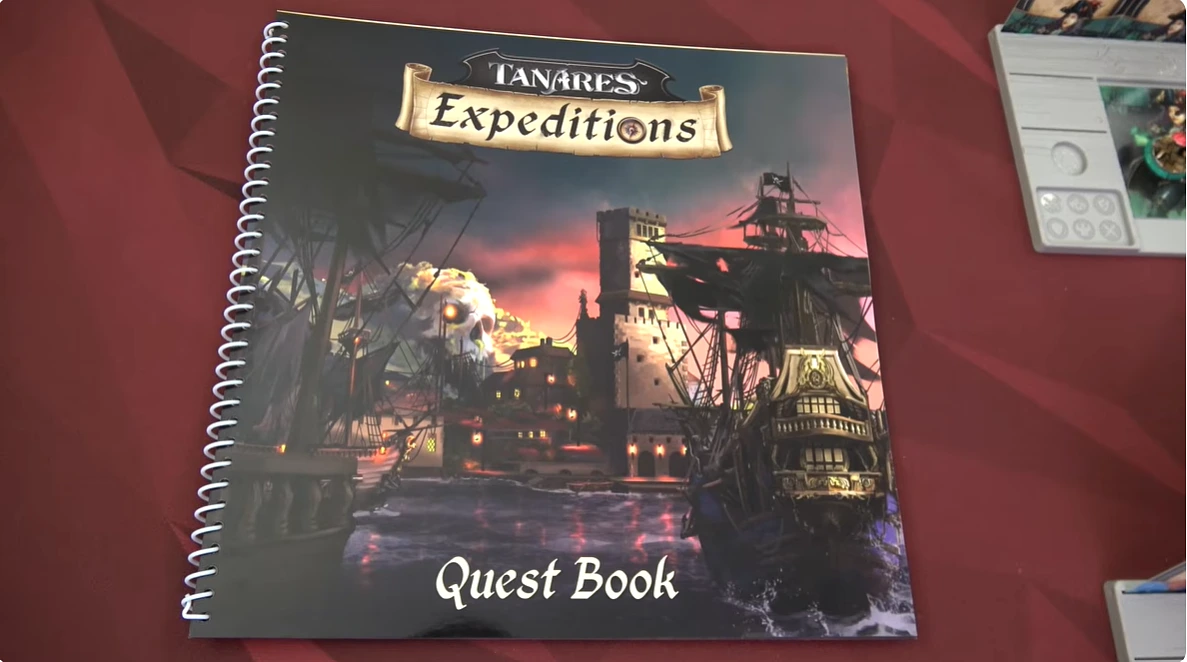
Plays Solo: Yes (but you are running all four pirates yourself) Player Count: 1 to 4 Ages: 14+ Length: 90 minutes and up per quest
Funded on Gamefound in November 2024, landed at my house in late April 2026. It is Gloomhaven with a pirate theme, and I mean that as a compliment. Minor bad guys on the way to a boss, every quest, with a combat system that has real teeth.
Here is the wrinkle that keeps it out of my top five. There must always be four pirates on the table, no matter how many humans are sitting there. At four players everyone gets one and it sings. At any other count you either run multiple pirates or use something called comrades, and the comrade rules are so underspecified that I gave up and just ran four full pirates every time.
Which is a shame, because underneath the fiddliness this is a big, satisfying dungeon crawler at sea. If you have a reliable group of four, move it up two spots in your head. See our review of Tanares Expedition to see whether the pirate theme carries you past the player count problem.
8. Word Weaver Adventures
Plays Solo: Not officially, but run two characters and it works fine Player Count: 1 to 4 Ages: 10+ Length: 30 minutes
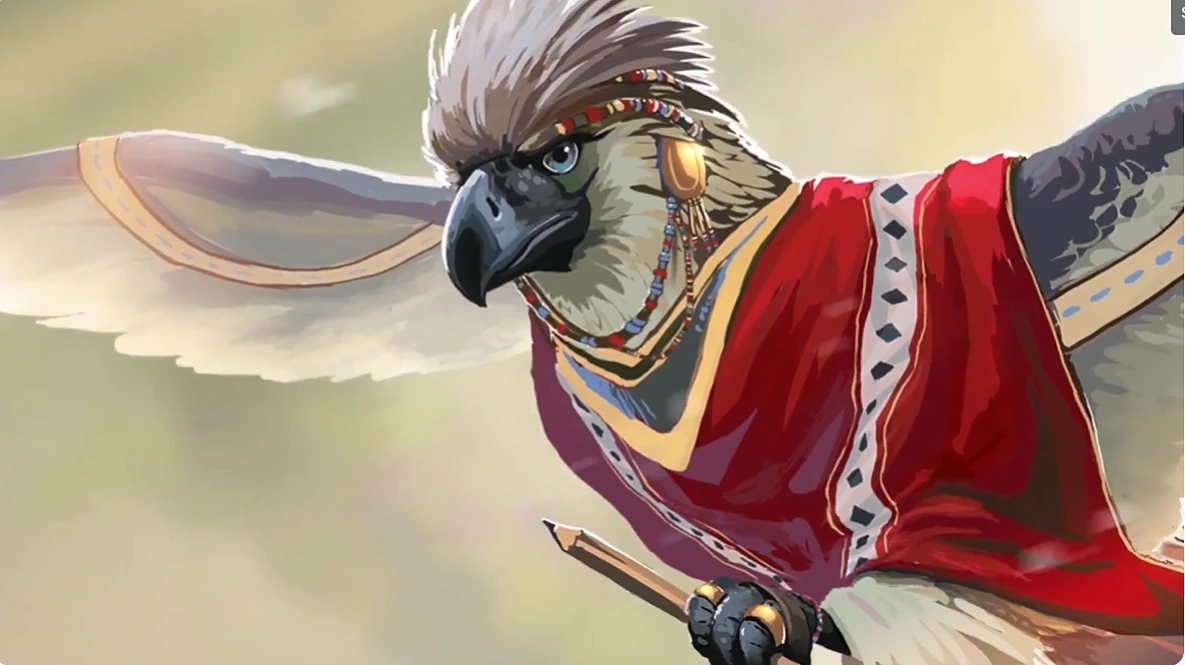
cooperative board games scrabble. That was the pitch, and I almost did not back it, because this was not a known company, just a group of passionate first-timers on Gamefound in June 2024. Tariffs and other delays pushed it to April 2026.
It is cooperative Scrabble that is also a boss-battler. You draw up to seven letters a turn and spell things to take out bad guys, with the point values doing the damage. Each of the four characters has a power fed by gems and letters, and you only start with three gems, so you get three uses in the whole game. Fulminate the Exploder can double a letter’s value. Spending that is a real decision.
The scaling is the weak point, and you have to actually read the difficulty rules for your player count instead of eyeballing it. Do that and this is a hidden gem, an 8/10 for me, and the easiest teach on this entire list because everyone already knows Scrabble. Read our review of Word Weaver Adventures.
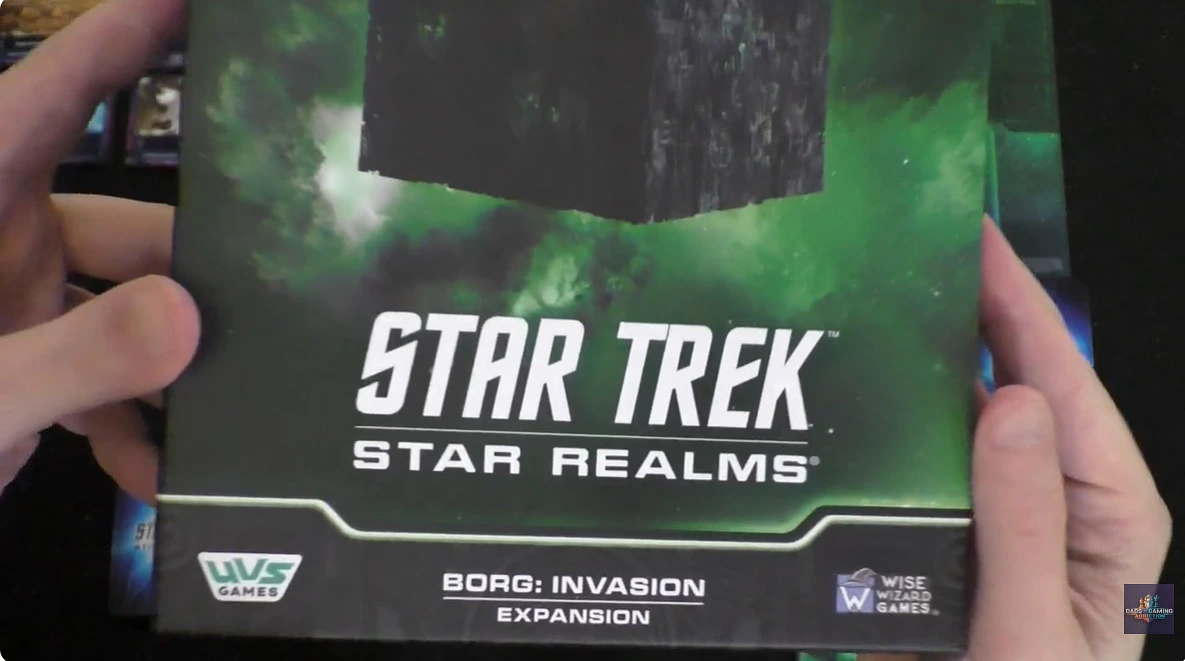
7. Star Trek: Star Realms With The Borg: Invasion Expansion
Plays Solo: Yes (Borg: Invasion is what finally adds it) Player Count: 2 to 4 cooperatively, 1 solo Ages: 14+ Length: 20 minutes
I have had Star Realms on my iPad for years and I play it constantly, always solo against the computer. So in my head Star Realms was a solo game that happened to have a physical version. Then UVS Games released Borg: Invasion, and the whole thing changed shape.
The expansion adds a cooperative mode where everyone teams up against the Borg Collective, and a versus mode where one player becomes the Borg. Drones get shuffled into the trade deck in the co-op and solo modes, so assimilation creeps into the pool you are all drawing from. Gambits give you a way to swing a bad moment back.
Twenty minutes. That’s the whole game. It is on this list because it takes a deck-builder a lot of people already own and turns it into something you can play cooperatively on a weeknight, and cheaply. The catch is obvious: it is an expansion, so you need the base game.
6. Aetherspire
Plays Solo: Yes (true solo, one hero with asymmetric powers) Player Count: 1 to 4 Ages: 8+ Length: 45-60 minutes
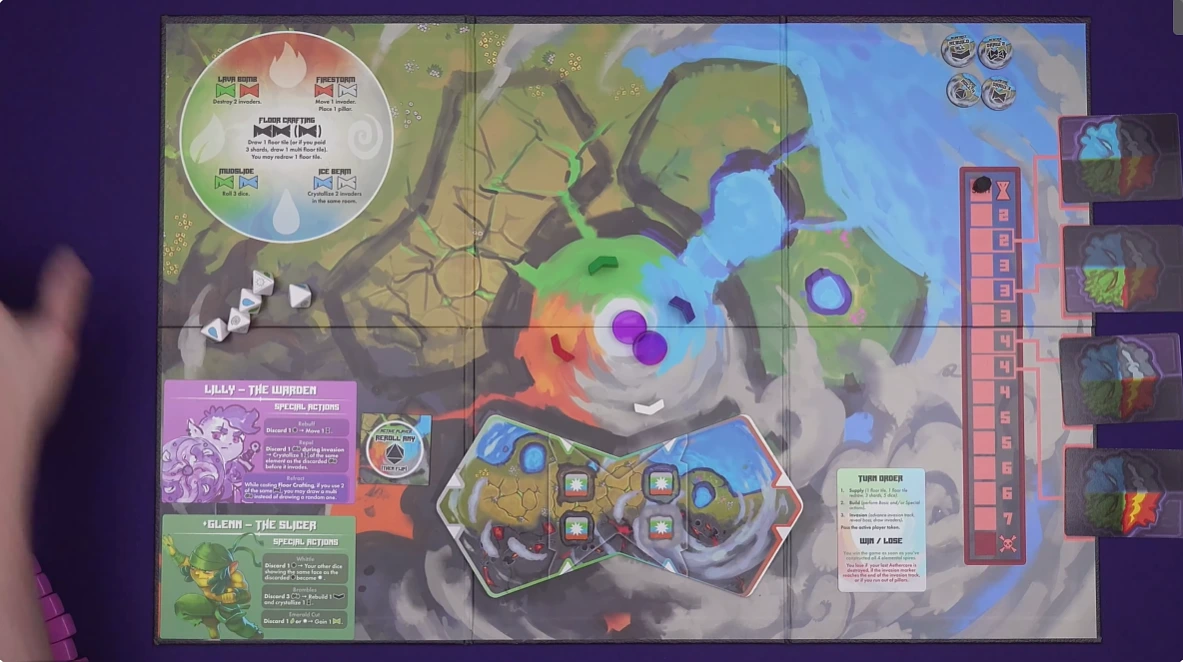
Jason Miceli and Phase Shift Games built a tower defense game where you physically stack tiles into towers. Four spires, one for each element, four levels each. Complete a spire and you knock out that element’s aetherfiend. Complete all four before the aethercore runs dry and you win.
It is not a dexterity game, which I want to be clear about, because the towers look like one. It is pure strategy that happens to produce a table full of small buildings rising toward the ceiling by the midpoint of the game. My friends kept picking it up just to look at it.
Fifteen heroes to choose from, sixteen boss cards, so the combinations hold up over repeat plays. The solo mode is officially supported and good. This one lands here rather than higher only because the 45 minute box time is optimistic once you get a table full of people arguing about which spire to feed next. Our review of Aetherspire is here.
5. Flash Point: Golden State Heroes

Plays Solo: Yes Player Count: 1 to 6 Ages: 10+ Length: 45 minutes
Kickstarter in June 2025, promised January 2026, landed in April 2026. Four months late, which in crowdfunding terms is basically punctual.
This is the third or fourth or possibly fifth Flash Point, and I stopped counting. What makes this one worth owning even if you have an older box is the Ignition System, a non-legacy way of building customized firefighters out of gear combinations. Nothing gets destroyed, nothing gets written on, and you can rebuild your crew every session.
Six double-sided boards set in Southern California, each with its own event deck tied to that map. Wildfires, earthquakes, the whole state doing what it does. Six players is a genuinely useful number, and there are not many good cooperative games that handle six without falling apart.
4. The Last Spell: The Board Game
Plays Solo: Yes (two-handed) Player Count: 1 to 4 Ages: 14+ Length: 120-150 minutes
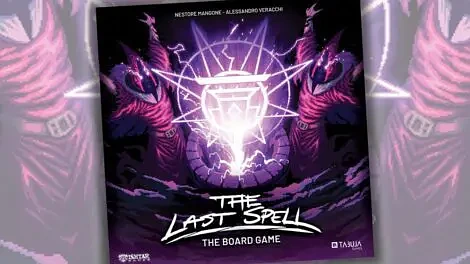
Tabula Games adapted the Ishtar Games video games, and the day/night structure survived the trip intact. Daytime you gather resources, build defenses, and upgrade your heroes. Night falls and the horde arrives, and you fight it out on a tactical map while the mages behind you keep trying to cast the spell that ends magic forever.
Here’s the part I have not stopped thinking about. The game balances by handing out action tokens. In my two-handed solo game each of my two characters got seven. In our four-player game we each got three. Fewer actions, but four brains watching four sections of the board.
And here’s the wrinkle that made it click cooperatively each player moves the monsters on their own side of the board. The admin gets shared out instead of dumped on one person. That might be the single best argument for playing this with people rather than alone. We even ran a three-player night when someone got sick, and the scaling held.
Two and a half hours is a real commitment, which is the only reason it isn’t higher. See our review of The Last Spell: The Board Game.
3. Cozy Stickerville
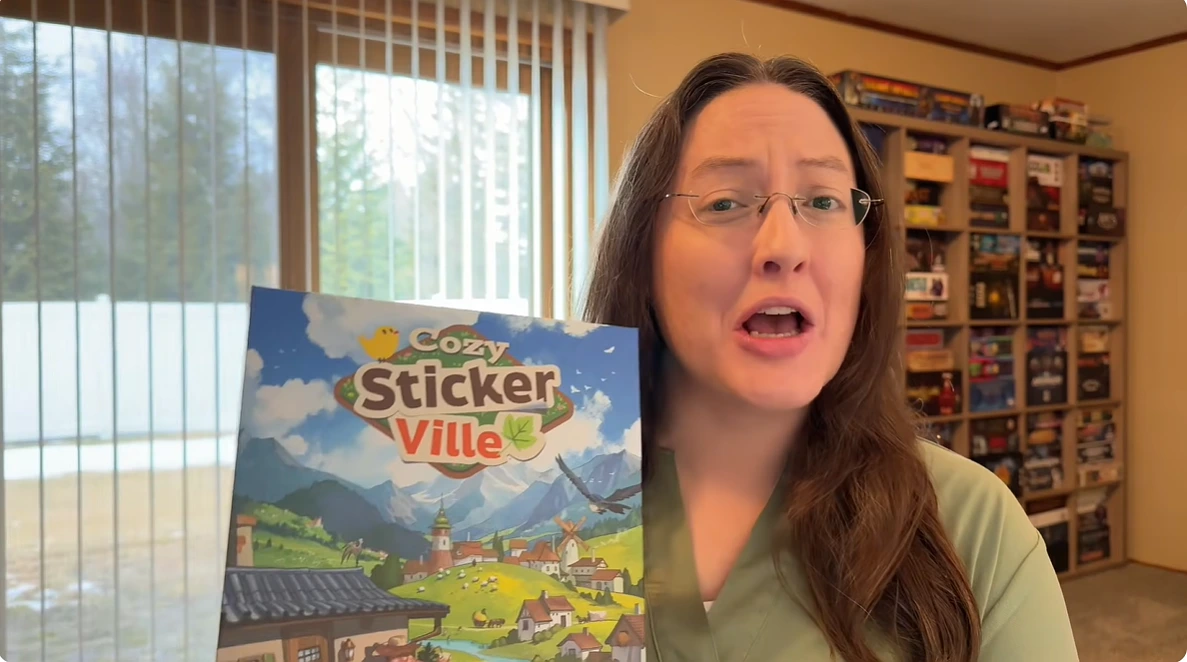
Plays Solo: Yes (true solo) Player Count: 1 to 6 Ages: 8+ Length: 30 minutes per game year
Corey Konieczka designed this for Unexpected Games, and it got nominated for the 2026 Spiel des Jahres. It didn’t win. I think the jury got it wrong, and I am allowed to say that here.
Each game is one year in your valley, twelve event cards for twelve months, and the full campaign runs ten years. You make choices, you look up the result in the story book, and most of the time the result is a sticker going onto the board. A barn. A bird nest. A house for the couple who just moved out from the city. Over eight hundred of them.
The stakes are deliberately low and that is the point. You talk out every decision, nobody is stressed, and there are barely any points of no return, so you can stop after two years and pick it up next month without losing the thread. My kind of legacy game.
Best part, and this is unusual for the genre: the board is double-sided and there are enough stickers for a second full campaign. It is not one and done. Finish your ten years, flip the board, and hand it to a different group. Our review of Cozy Stickerville is here.
2. The Glasgow Train Robbery
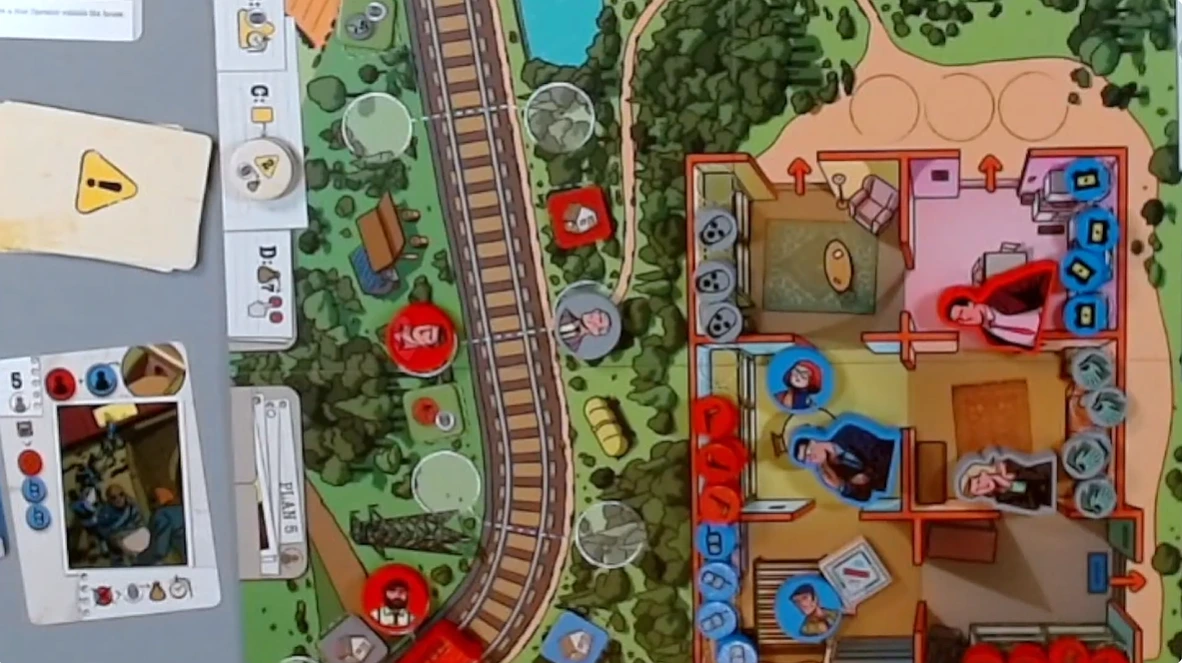
Plays Solo: No (two players, and the roles are wildly asymmetric) Player Count: 2 Ages: 14+ Length: 45-60 minutes
Gamefound in April 2026. Delivered to me in late June 2026. Three months from campaign to my table! I had to check the dates twice.
Salt & Pepper Games built this around the actual Great Train Robbery of 1963, and it is the first in a planned series about famous heists. One player is the Coordinator running the base, supplies, and the early stages of the plan. The other is the Operative out on the tracks. Five phases to complete before the train reaches London.
The limited communication is the whole game. You cannot just talk. You get keywords, and only when you take the action that lets you use them. It takes a game or two to stop trying to say more than you’re allowed.
Speaking of which: your first game is a teaching game, full stop. I lost my first game with Teresa and then lost my first game with Sam, and both times the postmortem was the good part. “I needed to move people out sooner.” “I needed to be talking earlier.” There is real agency here. You just don’t know what to do with it yet. If a guaranteed opening loss would sour you, be warned. If it wouldn’t, this is the tensest two-player co-op I have played this year. Read our review of The Glasgow Train Robbery.
1. Companion Quest
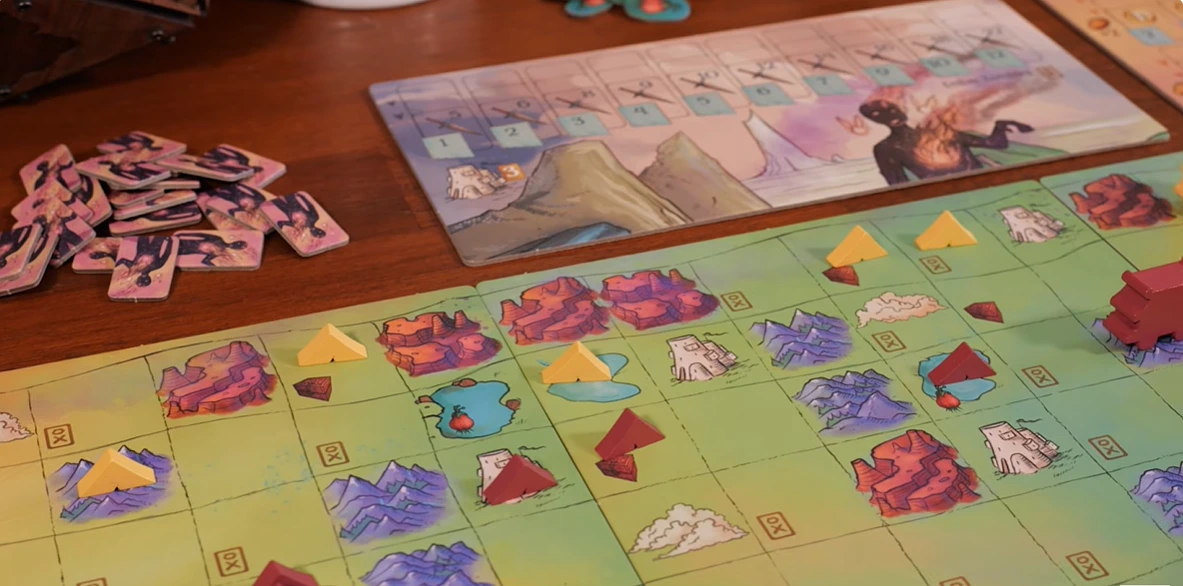
Plays Solo: Yes (true solo) Player Count: 1 to 4 Ages: 10+ Length: 30-45 minutes
Ghostfire Gaming, designed by Mark McIntyre and Logan Reese. It funded on Kickstarter with 1,206 backers against a $10,000 goal, finishing at $67,709, and then it went and became the game of RichieCon 2026.
That is not a figure of speech. It was the first official game played at the con, and over two days I saw it hit tables more times than anything else I own. Fifty-plus people, a hundred-plus games available, and this little gnome dice game kept coming back out.
You are gnomes chasing Gu'Gu, a troublemaker opening portals across the world. He starts one step ahead and needs three steps to escape. You spend energy to draft dice from six pools, roll them, and place them on quest and challenge cards. Fail a challenge, Gu'Gu moves. Complete a quest, you move.The cooperation is real and not decorative. If you draw a die you cannot use, you can hand it to the next player instead of wasting it. Companion abilities need a specific color to refresh, so somebody has to think about somebody else’s board. And the whole thing hinges on cascades, where the die you pick sets off two other things you weren’t planning.
Difficulty scales by snack tokens. Take two for an easier game, one for a harder one, and adjust how many monsters you shuffle into the twelve challenge cards. That is the entire difficulty system and it works better than most.
It is tricky. I have heard from people who took five games to win on easy mode. But it is the kind of losing you don’t mind, because you can see exactly what you should have done, and it is 40 minutes, so you just set it up again.